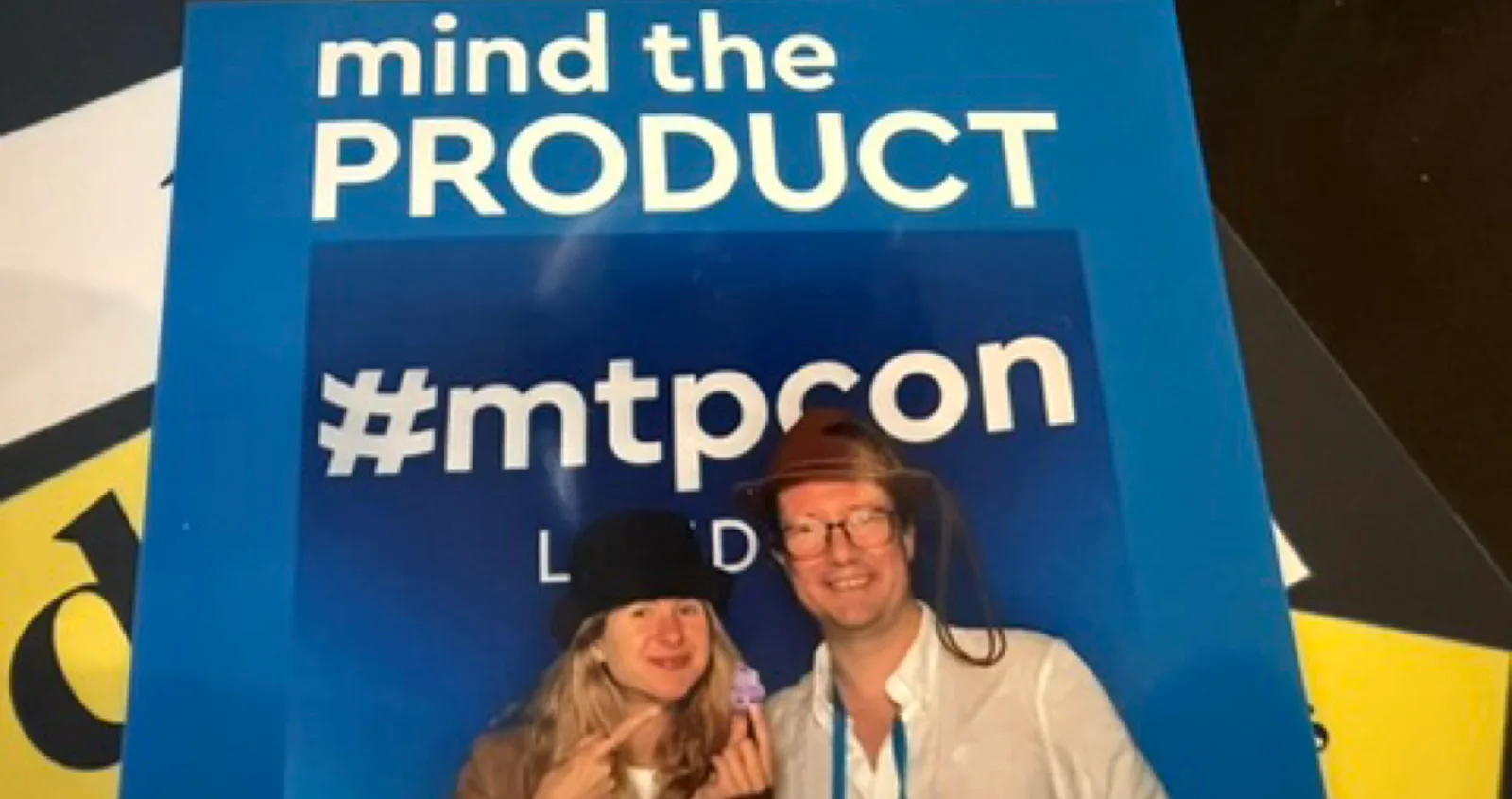
I spent most of last week in London conference halls. The Mind the Product Leadership Forum on Monday, mtpcon at the Barbican on Tuesday, the Product-Led Festival over near St Paul's on Thursday. Three events with three different crowds, and I'd expected to come home with three different sets of notes.
Instead it was, perhaps predictably, all much the same: AI has made building cheap, so the thing worth paying for now is knowing what to build. Call it judgment, or taste, or product sense. The decision matters, the execution is becoming a commodity.
Christian Idiodi opened mtpcon with one version of it, that product management has "drifted from invention into administration." John Moriarty from Fin gave a similar version backed by numbers: something like 94% of his company's pull requests are now written by AI, and whole categories of product are ceasing to be worth building as a result. April Dunford did the positioning version. By the time I reached the Product-Led Festival even the talk titles were at it, one of them billed without any apparent irony as "PM 2029: Not the CEO, but a Solopreneur."
If you still judge a product team by how much it ships, you're measuring the one thing that just stopped being hard. I've argued before that AI takes the process-shaped half of these roles and leaves the judgment behind, so I came in agreeing. What got me thinking was something subtler, and it took me until about the third retelling to notice. It started with the pronouns.
Whose judgment?
The new moat gets described in terms of a single person. The product creator, or builder. The solopreneur PM. The individual with good instincts and a fleet of agents doing the building. Dunford talks about having a point of view on where the market is going. Dan Dalton from Sage gave a talk called "Product management needs builders, not bureaucrats," which is fine, but we need to ask whose building, and whose judgment. The hero of all these talks is always just one person, and the agents are there to ten X their work.
It's a good story if you work alone. Most of the people in those rooms don't.
Of everything a product team produces, judgment is the hardest thing to pass around. The code travels. The designs travel. The spec travels, more or less. The actual sense of why this and not that, the instinct that took thirty customer conversations and one bad launch to form, stays in the head of whoever formed it. You can write the decision down. You can't write down the thing underneath it that let you make the decision in the first place.
I've gone at this before from two directions. Once about what I called the alignment tax, the cost a team pays when the reason a piece of work started stops travelling with the work. And once about agents starting cold every session, holding only what you hand them and none of the accumulated sense of why anything matters. Same problem both times. Judgment that lives in one head doesn't move, and it doesn't add up over time. The next person picks up the work and starts more or less from scratch.
So when a whole conference season tells me the moat is judgment, the next question is: whose judgment, and how does anyone else on the team get at it? For a company of one, fine. For a team, "we have good judgment" is a dependency on the one or two people holding the picture this quarter, not a moat.
The bottleneck already moved
Dave Killeen from Pendo pointed out that the product manager has gone from Michelin chef to "truffle hunter, pattern-matching at scale." The bit I noticed was less quotable. He said the constraint now isn't how productive you are, it's coordination. When everyone can build, the question stops being whether you can build the thing and becomes whether the six of you agree on which thing, and why, and whether the agents you've each set loose are working from the same understanding of the problem.
That reframes Idiodi's line for me. He called the drift "from invention into administration" a problem to be cleared away, the busywork AI should free us from. But the admin isn't a failure of nerve or taste. It's there because judgment won't spread on its own. The status meeting, the re-explaining, the document nobody enjoys writing: those are a clumsy, expensive way of doing one real job, keeping a shared picture alive by hand. Get rid of them and the job still needs doing. Telling everyone to be more inventive doesn't do it. If anything it makes it harder, because now there are more confident individual views to reconcile.
And the confident individual view is exactly what this moment produces. I wrote last time about coming out of a long session with an agent more sure of myself than I went in, because it had spent an hour agreeing with me. Run that across a team: six people, each leaving their own hour more certain, six private versions of right. The trap isn't that they disagree. It's that it doesn't feel like a disagreement, so everyone walks out of the meeting assuming they're aligned.
What AI didn't break
A fireside with people from Figma and the MONY Group, whose argument was roughly that AI didn't break planning or quality or decision-making, it just exposed where teams were already weak. I think that is right, and it's the same point I've been making from the other direction.
The cracks were always there. Mismatched mental models, context sitting in one person's head, the brief that changes shape between kickoff and launch. A team could carry all of that for years, because slow shipping hid it. Six weeks of build time is six weeks in which someone notices the spec is wrong and fixes it before anything ships. Take the six weeks down to an afternoon and there is no time for the gap to surface before the work is live. The fragmentation didn't get worse. It just stopped being survivable.
The friction worth keeping
There's a reading of all this that I don't believe, and I want to head it off, because it's the reading that sells software. It goes like this: friction is waste, meetings are waste, the arguing is waste, so make it efficient and get the humans out of the way.
Some of the friction is the point. A team gets good by having the hard conversation, the one where two people who both care turn out to want different things and have to find out why. You don't want that gone. You want more of it.
So the friction splits in two. There's the friction of getting onto the same page: re-explaining, hunting for the thing someone said three weeks ago, the meeting that exists only to sync. That's tax, and I'd happily lose it. Then there's the friction of actually disagreeing about the work, this segment or that one, ship now or get it right. That's not tax. That's the team thinking.
The two look the same from the outside, and the first crowds out the second. Most teams spend the meeting agreeing on what's even going on and never reach the disagreement that matters. Take away the first kind and you don't get a quieter team. You get one with time for the argument worth having. The goal was never fewer conversations. It's better ones.
Wednesday
I left out Wednesday. In the middle of the conference week, eleven of us got together for Ducks in a Row, a small community we have been trying to get going for product people. It was a social night more than a working one. Senior PMs, a few drinks, no agenda. Most of what got said stays in the room, but I can tell you the conversation kept drifting back to AI even there, off the clock, and that we managed to disagree about whether automated discovery is more or less a solved problem now.
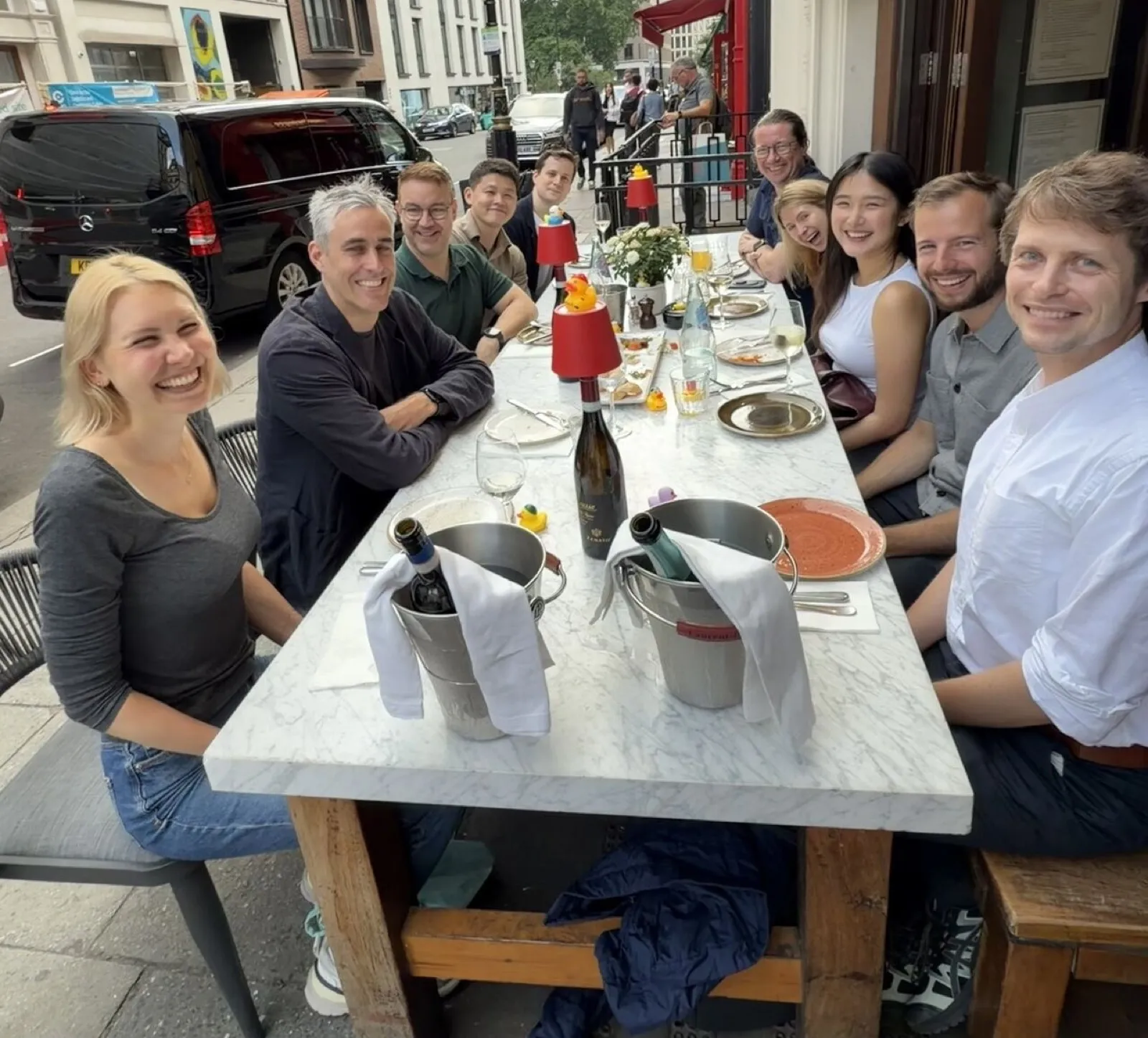
I came away thinking it was one of the better evenings of the week, which took me a while to make sense of, because on paper it was eleven people in a pub. The best I can do is this. Every talk that week had sold product as a solo act, one person and their agents. The part I valued most was the opposite of solo: a roomful of people who do this for a living, in one place, disagreeing about whether the thing the conferences had just crowned as the human edge is already automated. After a week of being talked at about the future being individual, the bit I enjoyed most was the company.
What I came home with
The moat really is judgment, and the conferences were right to drag the field off its fixation on shipping. But for a team, judgment isn't something you have. It is something you have to hold in common, which is harder and a lot less flattering, and it wasn't what anyone came on stage to talk about. Not how to become a person with taste. How to make taste something the whole team can see and use, including the agents now doing a chunk of the work.
It is a worse story for a keynote. "Become the product creator" sells. "Get your team to a shared picture and keep it current" does not. But I think the second one is the real problem, and the solo-operator version runs straight into it the day that solo operator hires someone.
If you want somewhere to start, it's the document nobody enjoys writing. Write down the why, not just the what. Most teams record the decision: build this, not that. Almost nobody records the thing underneath it, the customer conversations that moved you, the option you looked hard at and turned down, the reason this felt obvious in March that you won't be able to reconstruct by June. That's the part that doesn't travel on its own, and it's the part a new hire, or an agent, has no way to pick up. Then keep it current, which is the half nobody likes. A stale shared picture is worse than none: it gets trusted until it burns someone, and then nobody believes the next one, even when it's right. It isn't a moat you announce from a stage. It's a habit, and like the useful ones, it's dull and it pays back slowly.
None of this is about having fewer conversations. It's the opposite. When the picture is shared, a meeting stops being about getting everyone up to speed and becomes about the disagreement that actually matters. That's the conversation worth protecting, and it's the first thing the efficiency story cuts.
So the question I would leave any product leader with isn't whether your team has good judgment. Everyone says yes to that. It's the one underneath. When two people on your team make a call this week, are they working from the same picture, or from two private ones that each feel, to the person holding them, obviously right?